The Ultimate Checklist for First-Time Home Sellers in 2026
Table of Contents
- The Ultimate Checklist for First-Time Home Sellers in 2026
- The Ultimate Checklist for First-Time Home Sellers in 2026: Preparing Your Property
- Setting the Right Price: Data‑Driven Strategies
- Marketing Your Home in a Digital‑First World
- Negotiation and Offer Management
- Legal and Financial Closing Steps
- Post‑Sale Considerations
- Additional Resources to Accelerate Your Sale
Entering the real‑estate market as a seller for the first time can feel like stepping onto a tightrope. The stakes are high, emotions run deep, and the market dynamics of 2026 add an extra layer of complexity. Whether you’re moving for a new job, downsizing after a major life change, or simply cashing in on a property that has appreciated, a systematic approach will keep you from costly missteps.
This article delivers The Ultimate Checklist for First-Time Home Sellers in 2026—a roadmap that blends timeless best practices with the newest trends shaping the housing market this year. From pre‑listing preparations to the final paperwork, every step is broken down into actionable items, supported by data‑driven insights and practical tips.
Before you dive into the checklist, remember that selling a home is not just a transaction; it’s a strategic project. Aligning your timeline, financial goals, and personal priorities will make each subsequent task easier to execute. Below you’ll find a structured guide designed to keep you organized, informed, and confident throughout the entire process.
The Ultimate Checklist for First-Time Home Sellers in 2026
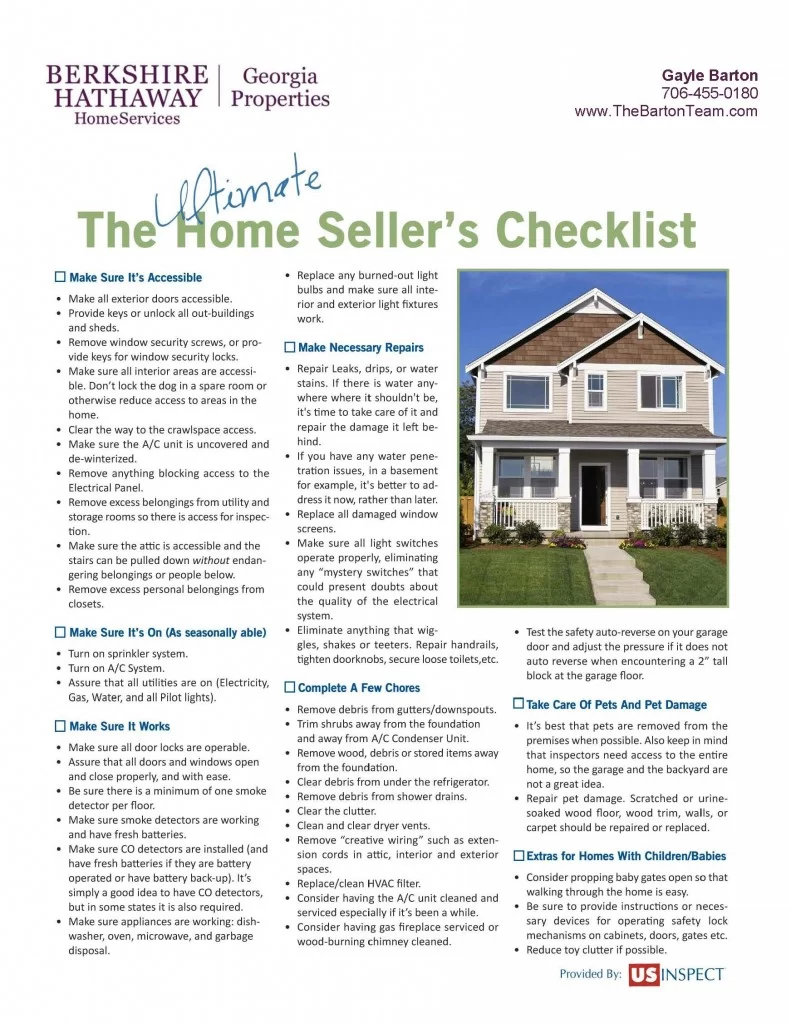
Home Seller Checklist – what Sellers Need to Do | Gayle Barton – Your
Below is the master list that every novice seller should follow. Treat it as a living document—tick off items as you complete them and revisit sections when market conditions shift.
The Ultimate Checklist for First-Time Home Sellers in 2026: Preparing Your Property
- Conduct a Pre‑Sale Home Assessment. Hire a certified home inspector to identify structural or systems issues that could affect buyer perception. Addressing problems early prevents renegotiations later.
- Implement Cost‑Effective Upgrades. Focus on high‑ROI improvements such as fresh paint, landscaping, and updated lighting. For detailed ideas on budget‑friendly enhancements, see how to increase your home value before selling without breaking the bank.
- Declutter and Depersonalize. Remove excess furniture, family photos, and personal memorabilia to allow buyers to envision their own lifestyle in the space.
- Stage Strategically. Professional staging can boost perceived value by 5‑10 %. Use neutral colors, arrange furniture to highlight flow, and create inviting focal points in each room.
- Gather Documentation. Compile warranties, repair records, utility bills, and HOA statements. A well‑organized file builds trust with prospective buyers.
Setting the Right Price: Data‑Driven Strategies
- Analyze Comparable Sales (Comps). Review recent sales of similar homes in your neighborhood, adjusting for square footage, condition, and amenities.
- Consider Market Trends. In 2026, inventory levels are projected to rise modestly, giving buyers more leverage. Use this insight to price competitively without leaving money on the table.
- Utilize Automated Valuation Models (AVMs). Platforms like Zillow and Redfin provide instant estimates, but treat them as a starting point, not a final figure.
- Consult a Real‑Estate Agent. An experienced agent can fine‑tune your price based on localized data, buyer sentiment, and upcoming developments.
Marketing Your Home in a Digital‑First World
- Hire a Professional Photographer. High‑resolution images and virtual tours are now baseline expectations; 70 % of buyers start their search online.
- Leverage Social Media Advertising. Targeted Facebook and Instagram ads can reach potential buyers within a 25‑mile radius, especially useful in suburban markets.
- List on Multiple Platforms. Ensure your property appears on MLS, Zillow, Trulia, and local real‑estate portals.
- Create a Dedicated Property Website. A single‑page site with photos, floor plans, and a contact form enhances credibility.
- Schedule Open Houses Strategically. Offer both virtual open houses (live streams) and traditional in‑person tours to capture a broader audience.
Negotiation and Offer Management
- Review All Offers Promptly. Time is of the essence; a delayed response can cause a buyer to withdraw.
- Assess Contingencies. Common contingencies include financing, appraisal, and inspection. Weigh their impact on the closing timeline.
- Counter‑Offer Wisely. Focus on price, closing costs, and move‑in dates rather than minor repair requests.
- Leverage Multiple Offers. If you receive several bids, create a competitive environment to drive up the final price.
Legal and Financial Closing Steps
- Hire a Real‑Estate Attorney. While not required in every state, legal counsel can safeguard you against hidden liabilities.
- Prepare the Disclosure Statement. Full transparency about known defects protects you from post‑sale disputes.
- Coordinate with the Buyer’s Lender. Ensure the appraisal aligns with the agreed price to avoid renegotiation.
- Schedule the Final Walk‑Through. Verify that agreed‑upon repairs are completed and the property is in the condition promised.
- Transfer Utilities and Services. Cancel or transfer electricity, water, internet, and any HOA dues before the closing date.
Post‑Sale Considerations
- Plan Your Next Move. Whether you’re buying a new home or renting, align your moving timeline with the closing date to avoid double‑housing costs.
- Tax Implications. Consult a tax professional about capital gains exemptions and any potential deductions related to selling costs.
- Update Your Address. Notify banks, credit cards, insurance providers, and the postal service of your new residence.
- Gather Feedback. Ask the buyer’s agent for insights on what appealed to buyers and what could be improved for future transactions.
Additional Resources to Accelerate Your Sale

Resources – Accelerate
If you’re looking for proven tactics to speed up the process, the article Top 10 Proven Tips to Sell Your House Fast and for More Money offers actionable advice that dovetails perfectly with this checklist. Pair those tips with the systematic approach outlined above, and you’ll be positioned to achieve a smooth, profitable sale.
Remember, each step on The Ultimate Checklist for First-Time Home Sellers in 2026 builds upon the previous one. Skipping a single item—whether it’s a minor repair or a thorough market analysis—can erode buyer confidence and reduce your net proceeds. By treating the sale as a project with defined milestones, you minimize risk and maximize the return on your investment.
Finally, keep a flexible mindset. The housing market reacts to interest‑rate shifts, local employment trends, and even seasonal weather patterns. Regularly revisit your checklist, update your pricing strategy, and stay in close communication with your real‑estate professional. With diligence, the right preparation, and a clear roadmap, selling your home for the first time in 2026 can be a rewarding experience that sets the stage for your next chapter.