Living Room Layout Guide: How to Arrange Furniture for Better Flow
Table of Contents
- Living Room Layout Guide: How to Arrange Furniture for Better Flow
- Living Room Layout Guide: How to Arrange Furniture for Better Flow – Defining Primary Traffic Paths
- Balancing Focal Points and Furniture Placement
- Choosing Multipurpose Pieces for Seamless Flow
- Utilizing Rugs to Define Zones Without Hindering Flow
- Strategic Placement of Lighting and Accessories
- Adapting the Layout for Different Activities
- Measuring and Mock‑Up Techniques
- Common Mistakes to Avoid in a Living Room Layout Guide
Designing a living room that feels both welcoming and functional is a nuanced challenge. Whether you are working with a compact apartment or a spacious family area, the way you position each piece of furniture can dramatically influence the room’s visual harmony and practical flow. A well‑thought‑out layout not only showcases your style but also creates pathways that encourage easy movement and social interaction.
In this comprehensive guide, we will explore proven methods to optimize your living space, focusing on traffic patterns, focal points, and the balance between aesthetics and utility. By the end of the article, you will have a clear roadmap for arranging your furnishings in a way that maximizes comfort, accessibility, and visual appeal.
Living Room Layout Guide: How to Arrange Furniture for Better Flow
Living Room Layout Guide: How to Arrange Furniture for Optimal Flow and
The first step in any Living Room Layout Guide: How to Arrange Furniture for Better Flow is to assess the room’s dimensions and architectural features. Measure the length, width, and ceiling height, and note the locations of doors, windows, built‑in shelving, and heating vents. These fixed elements dictate the possible traffic routes and will inform where larger pieces, such as sofas and media consoles, should be placed.
Living Room Layout Guide: How to Arrange Furniture for Better Flow – Defining Primary Traffic Paths
Effective traffic flow is achieved by establishing clear, unobstructed pathways that allow occupants to move freely from entry points to functional zones. Aim for at least 36‑inch wide walkways between furniture items; this width accommodates most foot traffic and wheelchairs, ensuring inclusivity. Visualize the room as a series of “zones” – for example, a conversation area, a media viewing zone, and a reading nook – and then draw imaginary lines connecting each zone to the doors. These lines become your primary traffic paths.
- Entry‑to‑Seating Path: Position the main sofa or sectional so that a straight line can be drawn from the front door to the seating without crossing other furniture.
- Media Access Path: If a TV or fireplace serves as a focal point, ensure a clear line of sight from the primary seating while keeping the pathway to the TV stand free of obstacles.
- Secondary Zones: For side chairs, floor lamps, or a small desk, place them near existing walkways but offset enough to avoid cluttering the main routes.
When the layout respects these routes, the room feels open and inviting, preventing the sense of “crowdedness” that can occur in poorly arranged spaces.
Balancing Focal Points and Furniture Placement
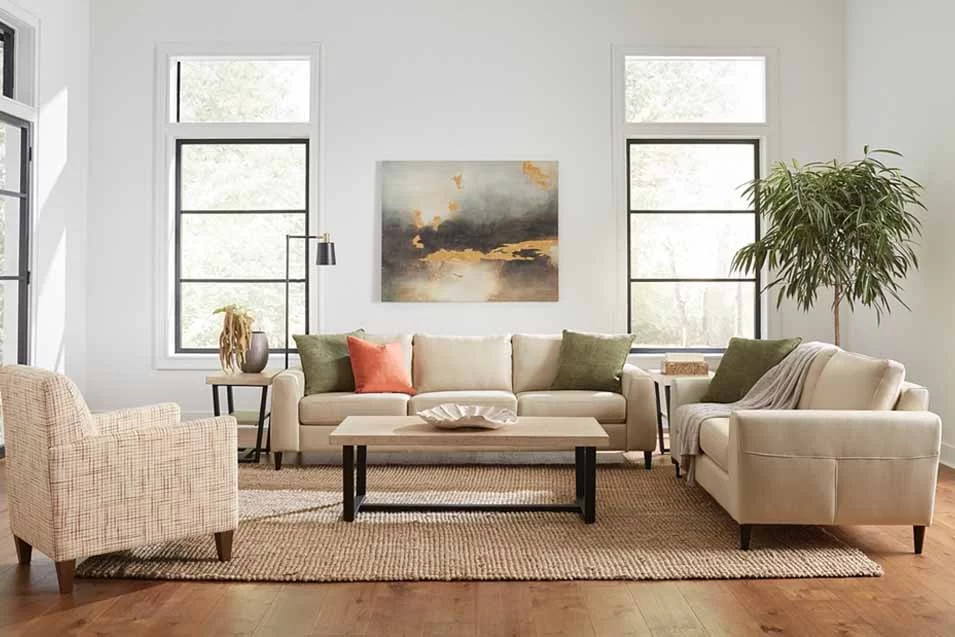
Every living room possesses a natural focal point – often a fireplace, a large window, or an entertainment system. In a Living Room Layout Guide: How to Arrange Furniture for Better Flow, the furniture should be organized to highlight this anchor while maintaining fluid movement. Place the largest seating piece (usually the sofa) facing the focal point, and arrange secondary seating (armchairs, poufs) at angles that promote conversation without obstructing the view.
For example, if a window offers a scenic view, consider arranging a low-profile sofa parallel to the glass, complemented by a pair of lounge chairs at a 45‑degree angle. This arrangement draws attention to the view and creates an inviting space for gathering. To explore how color can enhance such arrangements, see our article on Living Room Color Schemes: The Most Relaxing Palettes According to Designers.
Choosing Multipurpose Pieces for Seamless Flow
In smaller or multifunctional rooms, selecting furniture that serves multiple purposes reduces clutter and supports a smoother circulation. A coffee table with hidden storage, an ottoman that doubles as a footrest and extra seating, or a media console with built‑in bookshelves can all contribute to a tidy layout. The Best Multipurpose Furniture for Compact Living Rooms article provides a curated list of such items.
Utilizing Rugs to Define Zones Without Hindering Flow
Area rugs are powerful tools for visually separating functional zones while preserving the continuity of movement. Choose a rug that is large enough to accommodate the front legs of the main seating pieces; this anchors the furniture and prevents the space from feeling disjointed. Ensure the rug’s edges do not interfere with traffic pathways – a common misstep is placing a rug too small, causing foot traffic to trip over its borders.
Strategic Placement of Lighting and Accessories
Lighting fixtures, artwork, and decorative accessories should complement the flow rather than disrupt it. Floor lamps positioned behind sofas or beside armchairs illuminate seating areas without occupying valuable floor space. Wall-mounted sconces can free up floor area while adding ambient light. When selecting décor, maintain a cohesive theme; for instance, an earthy palette can enhance a relaxed atmosphere – see our guide on Earth Tones and Textures: Creating a Cozy Boho Living Room for inspiration.
Adapting the Layout for Different Activities
Consider how the room will be used throughout the day. A space that transitions from family TV night to a home office requires adaptable furniture placement. Incorporate mobile pieces on caster wheels, or use lightweight side tables that can be easily repositioned. When the room doubles as a work area, position the desk near natural light but away from primary traffic paths to avoid congestion.
Measuring and Mock‑Up Techniques
Before committing to a final arrangement, create a scaled floor plan using graph paper or digital tools such as SketchUp or Roomstyler. Place cut‑out shapes representing each furniture item to visualize the layout. This step helps identify potential bottlenecks early and allows for quick adjustments. Alternatively, use painter’s tape on the floor to outline the footprint of each piece – a tactile method that provides immediate feedback on flow.
Common Mistakes to Avoid in a Living Room Layout Guide
- Placing furniture too close to walls, which can make the room feel cramped.
- Blocking doorways or windows, reducing natural light and accessibility.
- Neglecting the scale of pieces relative to the room size; oversized sofas in a petite space hinder movement.
- Ignoring the balance between visual weight and functional pathways, leading to an unbalanced aesthetic.
By staying aware of these pitfalls, you can refine your layout to achieve both harmony and efficiency.
In summary, a successful Living Room Layout Guide: How to Arrange Furniture for Better Flow blends thoughtful measurement, strategic zoning, and the careful selection of multifunctional furniture. Prioritizing clear traffic routes, honoring focal points, and using accessories wisely ensures that the room feels spacious, welcoming, and adaptable to various activities. Whether you are redesigning a compact city apartment or a spacious suburban living room, applying these principles will help you create an environment where movement is effortless and style is unmistakable.